
The Postal Service is part of the fabric of the nation, and postal employees make a difference in every community across the country. We’re committed to protecting customers, recognizing heroic employees, educating consumers about fraud and helping families have a happier holiday season.
for PTSD research
The Healing PTSD semipostal stamp has raised more than $2.3 million for PTSD research since 2019. More than 20.1 million Healing PTSD stamps have been sold.
for Alzheimer’s research
The Alzheimer’s semipostal stamp has raised nearly $1.6 million for research since 2017. Nearly 12.8 million Alzheimer’s stamps have been sold.
for species conservation
The Save Vanishing Species semipostal stamp has raised more than $8.5 million since 2011. Nearly 72.2 million Save Vanishing Species stamps have been sold.
is getting greener
The Postal Service is working hard to put its stamp on a greener tomorrow for the many communities we serve. Postal carriers deliver mail using alternative fuel vehicles, on foot and even on bicycles. Mail is delivered by bicycle on 71 routes in Florida and Arizona and almost 6,100 carriers deliver mail solely on foot.
ALERT program
As one of the few points of human contact for some homebound customers, letter carriers are particularly attuned to signs that could indicate an accident or illness. If carriers notice something unusual, such as uncollected mail at an at-risk customer’s home, the employee will alert emergency personnel. Carrier Alert began in 1982.
Awareness
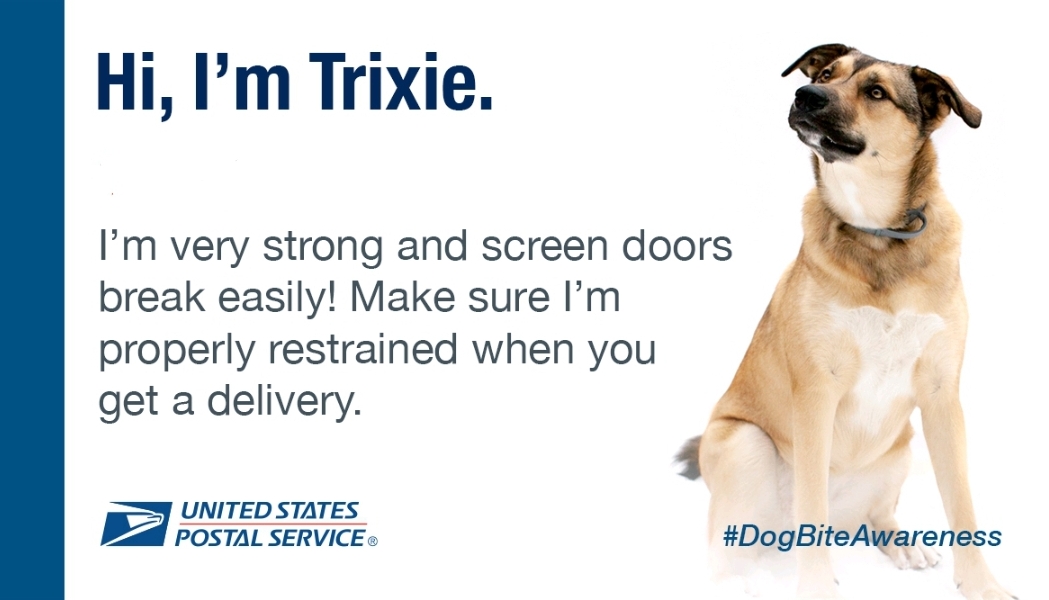
Thousands of carriers deliver to homes with dogs every day. During the annual USPS National Dog Bite Awareness Campaign, the Postal Service promotes safety initiatives and shares prevention tips to protect employees and customers from dog bites.
The USPS National Dog Bite Awareness Campaign promotes responsible pet ownership to protect Postal Service employees and customers.
Hunger food drive
Every year, the Postal Service and the National Association of Letter Carriers hold the largest one-day food drive in the nation. The program has collected more than 1.9 billion pounds of food since the campaign began in 1993.
bicycle delivery routes
The Postal Service delivers mail by bicycle on 52 routes in Arizona and Florida, reducing emissions and saving fuel.
gallons of oil recycled
In fiscal year 2025, the Postal Service recycled 353,650 gallons of used oil — equivalent to saving more than 14.5 million gallons of crude oil.
pounds of batteries
In 2025, the Postal Service recycled 32,000 pounds of small lead-acid and dry cell batteries, including lithium-ion batteries, which are found in cellphones, laptops, scanners and other small electronics.
The U.S. Postal Service upholds its promise to deliver the nation’s Election Mail securely and on time, consistent with the organization’s non-partisan public service mission.
USPS fleet of feet
There are almost 6,100 carriers who deliver mail entirely on foot. These carriers are our fleet of feet.
solar panels
Sunny times ahead. The Postal Service has a solar power generation system consisting of more than 25,755 solar panels at its Los Angeles mail processing facility.
for consumers
During National Consumer Protection Week, the Federal Trade Commission’s annual awareness campaign, USPS and the Inspection Service provide customers with education, tools and information to combat identity theft and mail fraud.
Operation Santa
USPS Operation Santa. This program is in its 114th year of operation and relies solely on random acts of kindness and the generosity of strangers. During the 2025 holiday season, millions of people visited uspsoperationsanta.com. Generous customers adopted letters written to Santa and fulfilled wishes, helping families and children experience the magic of the season when they might not have otherwise, one letter to Santa at a time.

For more information, go to USPSOperationSanta.com.
In 2020, the program expanded nationwide for the first time. More than 1 million people visited USPSOperationSanta.com. Generous customers shipped more than 21,000 packages to the families and children who wrote to Santa to help them have a happier holiday.
In 2019, the digital program continued to expand. Letters were accepted letters from 17 locations, and the letters could be adopted by anyone in the country. Gifts could be shipped from more than 19,000 post offices.
In 2018, the Postal Service expanded the 2017 pilot test to include 6 additional cities (Austin, Indianapolis, Philadelphia, Phoenix, San Diego, Washington DC – and Puerto Rico and Chico, CA (site of wildfires). Letters from those locations populated the website and people in those locations only could adopt them and ship from one dedicated post office per city.
In 2017, the Postal Service launched a pilot test of a digital Operation Santa option for residents of New York City. People living in New York City, within proximity of the James A. Farley building could adopt letters online and ship gifts from JAF. Puerto Rico was also added after the hurricanes that year.
HISTORY
In 1912, Postmaster General Frank Hitchcock authorized local postmasters to allow postal employees and citizens to respond to letters addressed to Santa Claus and the program came to be known as Operation Santa.
In the 1940s, mail volume increased to the point where the Post Office Department invited charitable organizations and corporations to participate for philanthropic purposes —providing written responses and small gifts.
Through the years, the program has taken on a life of its own and today cities around the country have established successful programs with recognized charitable organizations, major corporations, local businesses and postal employees making a major difference in the lives of the children from coast to coast.
deliver the mail
We have heroes among us. Postal employees regularly go above and beyond to protect the lives of the people they serve, including elderly or disabled customers, through the Carrier Alert Program. In fiscal year 2025, the Postal Service recognized 95 heroic employees through the Postmaster General Heroes’ Program.
fleet of feet
Approximately 6,100 carriers deliver mail entirely on foot — the USPS fleet of feet. Mail is also delivered by bicycle on select routes in Arizona and Florida, reducing emissions and saving fuel.
alternative-fuel vehicles
During fiscal year 2025, USPS operated a fleet of 35,084 alternative-fuel vehicles, including electric, hybrid, ethanol, compressed natural gas and liquid propane gas vehicles.
for breast cancer research
The Breast Cancer Research semipostal stamp has raised nearly $98.5 million since 1998. More than 1.1 billion Breast Cancer Research stamps have been sold.
Trademarks
The Sonic Eagle Logo, the trade dress of USPS packaging, the Letter Carrier Uniform and the Postal Truck and the following marks are among the many trademarks owned by the United States Postal Service: Click-N-Ship®, Deliver The Win®, EDDM®, ePostage®, Every Door Direct Mail®, Express Mail®, First-Class™, First-Class Mail®, First-Class Package International Service®, Forever®, Global Express Guaranteed®, IMb®, Informed Delivery®, Intelligent Mail®, Label Broker™, Parcel Select®, P.O. Box™, Post Office®, Pony Express®, Postal Inspection Service™, PostalOne!®, Postal Police®, #PostalProud®, Priority Mail Express International®, Priority Mail Flat Rate®, Priority Mail International®, Priority: You®, Registered Mail™, Standard Mail®, The Postal Store®, United States Postal Inspection Service®, United States Postal Service®, U.S. Mail®, U.S. Postal Inspector™, U.S. Postal Service®, USPS®, USPS BlueEarth®, USPS Mobile®, USPS Operation Santa®, USPS Tracking®, usps.com®, We are people delivering to people™, ZIP+4® and ZIP Code™. This is not a comprehensive list of all Postal Service trademarks.
Non-Postal Trademarks
Dollar General®, Forest Stewardship Council®, How2Recycle®, McDonald’s®, National Dog Bite Prevention Week®, Starbucks®, Subway®, Sustainable Forestry Initiative®, The Climate Registry®.
Postal Facts 2024 provides the public with information about the U.S. Postal Service. The facts in this publication may be reproduced for the purpose of stating the fact itself, in a business, informational or academic context and the like, and in the body of text discussing factual subject matter relevant to the fact being presented. However, these facts may become outdated after publication and seeking the latest information is advised.
Produced by U.S. Postal Service Corporate Communications
© 2024 United States Postal Service. All rights reserved.
© 2016-2026 United States Postal Service. All rights reserved.
Trademarks
The Sonic Eagle Logo, the trade dress of USPS packaging, the Letter Carrier Uniform and the Postal Truck and the following marks are among the many trademarks owned by the United States Postal Service: Click-N-Ship®, Deliver The Win®, EDDM®, ePostage®, Every Door Direct Mail®, Express Mail®, First-Class™, First-Class Mail®, First-Class Package International Service®, Forever®, Global Express Guaranteed®, IMb®, Informed Delivery®, Intelligent Mail®, Label Broker™, Parcel Select®, P.O. Box™, Post Office®, Pony Express®, Postal Inspection Service™, PostalOne!®, Postal Police®, #PostalProud®, Priority Mail Express International®, Priority Mail Flat Rate®, Priority Mail International®, Priority: You®, Registered Mail™, Standard Mail®, The Postal Store®, United States Postal Inspection Service®, United States Postal Service®, U.S. Mail®, U.S. Postal Inspector™, U.S. Postal Service®, USPS®, USPS BlueEarth®, USPS Mobile®, USPS Operation Santa®, USPS Tracking®, usps.com®, We are people delivering to people™, ZIP+4® and ZIP Code™. This is not a comprehensive list of all Postal Service trademarks.
Non-Postal Trademarks
Dollar General®, Forest Stewardship Council®, How2Recycle®, McDonald’s®, National Dog Bite Prevention Week®, Starbucks®, Subway®, Sustainable Forestry Initiative®, The Climate Registry®.
Postal Facts 2024 provides the public with information about the U.S. Postal Service. The facts in this publication may be reproduced for the purpose of stating the fact itself, in a business, informational or academic context and the like, and in the body of text discussing factual subject matter relevant to the fact being presented. However, these facts may become outdated after publication and seeking the latest information is advised.
Produced by U.S. Postal Service Corporate Communications
© 2024 United States Postal Service. All rights reserved.
© 2016-2026 United States Postal Service. All rights reserved.
